






Indonesia: Central West Papua
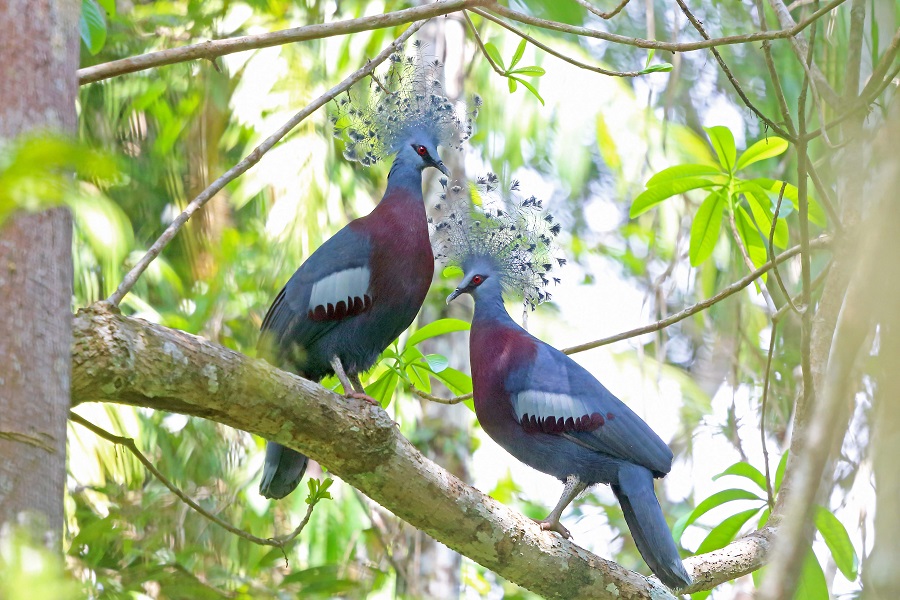
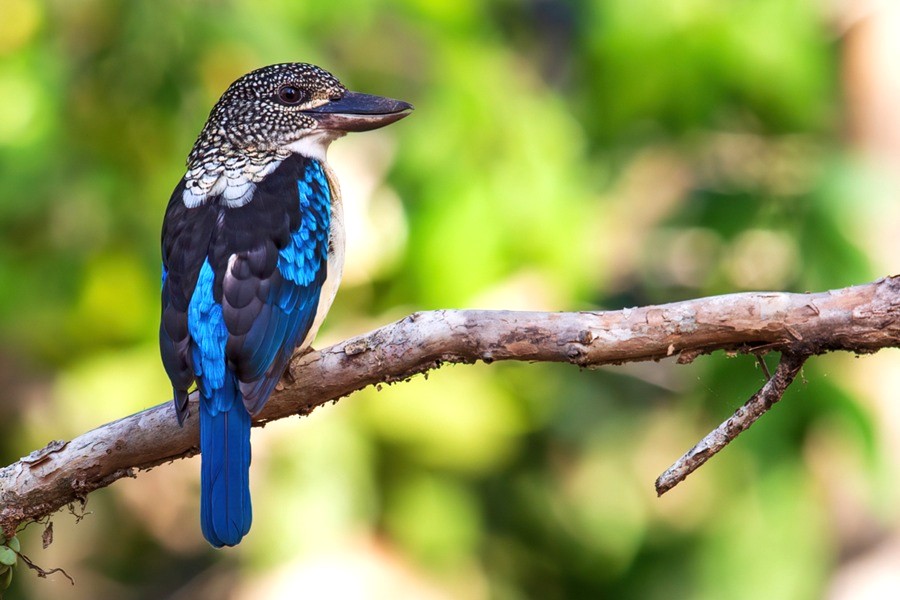
This tour complements our Vogelkop itinerary, covering the other half of West Papua. Fully accommodated in comfortable hotels and basic guesthouses, there is no camping. We explore the Trans-Fly woodlands near Merauke in search of Spangled Kookaburra and a suite of endemics mannakins, before crossing the central range and birding around Nimbokrang where northern specialties like Victoria Crowned Pigeon and Pale-billed Sicklebill highlight, with display sites for Twelve-wired, King and Lesser Bird-of-paradise also nearby. Finally, the islands of Biak and Numfor conclude the tour with their respective paradise kingfishers and many other exciting endemics.
Next Dates
19 July - 2 August 2026 (15 days)
Leaders:
Joshua Bergmark
Group Size Limit:
7
Single Room Supplement: $
400 USD
Deposit: $
750 USD
Price: $
7450 USD
Add a Title
Leaders:
Joshua Bergmark
Group Size Limit:
Add a Title
Single Room Supplement: $
TBD
Deposit: $
TBD
Price: $
TBD
It is of utmost importance in West Papua to have reliable contacts who can smoothly arrange access to all birding areas and hides. We work with the wonderful Shita Prativi who has been running bird tours and assisting BBC / National Geographic film crews here for longer than anyone else.
Accommodation:
Comfortable hotels for Merauke, Jayapura, and Biak. Basic guesthouses at Nimbokrang and Numfor.
Walking difficulty:
Mostly moderate roadside or trail-based birding, with a few optional longer walks (several hours at birding pace) around Nimbokrang.
Tour cost includes:
All accommodation, main meals, drinking water, internal flights (as stated in itinerary), overland transport, tips to local drivers and guides, travel permits, entrance fees, and guide fees.
Tour cost excludes:
Flights before and after the tour start/end, visa, travel insurance, tips to tour leaders, laundry, drinks, and other items of a personal nature.
Day 1: Tour begins this morning in Merauke (MKQ) on the south coast of New Guinea (cheap direct flights land early in the morning are available from Makassar). We will head out into the tropical woodland and begin our exploration of the area. Night in Merauke.
Day 2-3: Pride of place among the species to be found in this distinctly Australian-influenced bioregion is the magnificent Spangled Kookaburra, which is endemic to the Trans-Fly along with Black Mannikin, White-spotted Mannikin, and Grey-crowned Mannikin. An additional Estrildid here is the beautiful “White-bellied” Crimson Finch, which is also endemic aside from an isolated population in remote parts of Queensland and some introduced birds around Jayapura. We should be able to enjoy several boisterous Greater Bird-of-paradise near their display tree, and we will keep an eye out for the isolated lowland form of Papuan White-eye (the taxonomy of which is certainly to-be-resolved!). Among many other species present in the area, we might see Black-billed Brushturkey, Spotted Whistling Duck, Green Pygmy Goose, Magpie Goose, Barred Owlet-nightjar, Yellow-streaked Lory, Red-winged Parrot, Blue-winged Kookaburra, Black-eared Catbird, Tropical Scrubwren, Graceful Meliphaga, Black Thicket Fantail, and Black-backed Butcherbird. Night in Merauke.
Day 4: After some final morning birding, we will take a flight north to Jayapura
Day 5: Birding in the lowlands towards the Papua New Guinea border in search of Edward’s Fig Parrot and perhaps Black-fronted Fig Parrot. We will aim to spend the middle of the day poking into primary forest from various new roads cutting the region in search of rare lowland endemics, which should be of a slightly different variety to those at Nimbokrang.
Day 6: Predawn departuer to reach Nimbokrang at the base of the imposing Cyclops Mountains, where we will be based for the next four nights at a basic guesthouse. The remainder of the day will be spent exploring this bird-rich area. Night at Nimbokrang.
Days 7-8-9: The flat, alluvial rainforests of Nimbokrang have suffered from logging, but large tracts of good secondary and selectively logged forest remain. The birding in these mosquito-infested swamp forests is by no means easy, but the rewards are great. Several bird-of-paradise species can be found here, and we will be hoping to find Pale-billed Sicklebill and witness the amazing displays of Twelve-wired and King Birds-of-paradise. The seemingly endless list of possible species here includes some true specialties of the area, and thus we will target Salvadori’s Fig-Parrot, Brown and Black-capped Lories, Lowland Peltops, Buff-faced Pygmy Parrot, Blue Jewelbabbler, White-eared Catbird, Brown-headed Crow, and Jobi Manucode. Victoria Crowned Pigeon and Collared Brushturkey are present but not guaranteed, and there’s always the chance of Shovel-billed Kookaburra. Nights at Nimbokrang.
Day 10: After a final day of birding in these tropical lowland forests, we will return to Sentani for an overnight stay.
Day 11: Early in the morning, we will look for Great-billed and Hooded Mannikin at some nearby grasslands before taking a flight to Biak. In the afternoon, we will begin our birding and will soon find some of the more common island endemics. Night in Biak.
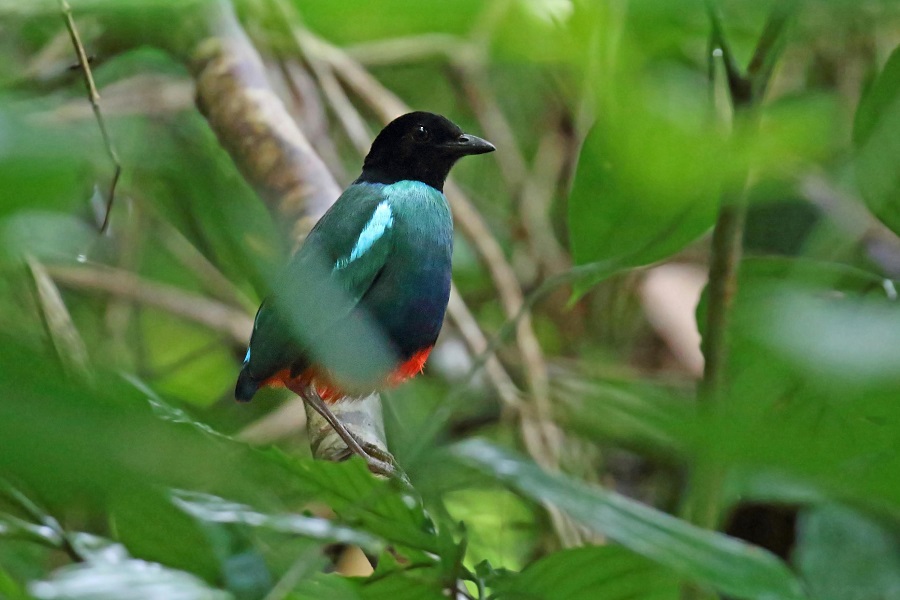
Days 12-13-14: Most endemics are best searched for in the forest here, including the pleasingly common Biak Paradise Kingfisher and Biak Hooded Pitta! Feeding flocks provide much excitement and are often joined by some of our targets: Geelvink Pygmy Parrot, Biak Gerygone, Biak Leaf Warbler, Biak Black Flycatcher, “Biak” Golden Monarch, and the rare Biak Monarch. We will also try to see the notoriously retiring Biak Scrubfowl and Biak Coucal, while at night, the endemic Biak Scops Owl is usually similarly difficult to see! In more open areas, we will look for Long-tailed Starling, Yellow-bibbed Fruit Dove, Claret-breasted Fruit Dove, and Geelvink Imperial Pigeon, which are vocal and often perch conspicuously. Secondary growth is also the favoured habitat of the endemic Biak White-eye, while overhead Black-winged Lory flash past, and with luck also the rapidly declining Biak Lorikeet. We do not expect to see the exceedingly uncommon Red-brown Myzomela, but will keep an eye out nonetheless! If the weather is good and the seas are calm, we will take a one-night excursion across to Numfor. Numfor Paradise Kingfisher is abundant on the island, while the scarce Numfor Leafwarbler may take some searching. We may also see the Numfor form of Hooded Pitta and several other Geelvink Bay endemics shared with Biak, before returning to Biak. Nights in Biak.
Day 15: After a last birding session, the tour ends in the late morning. Departures are from Biak International Airport (BIK), everyone will be able to catch a cheap direct flight to Jakarta.
NOTE: Access to Lake Habbema has been extremely unreliable for the past six years due to millitary blockades, and the situation shows no sign of improving. More than 90% of visiting birders are turned away from the higher elevations with the key endemics like Snow Mountain Quail, Macregor's Honeyeater, Greater Ground Robin, and Western Alpine Mannikin. If this area opens again safely we will add it as an extension to the main tour, however we expect that the special birds of the Snow Mountains will remain off-limits for the foreseeable future. When things eventually change, we will be running a set of tours to this area as "catch-ups" for those who want to visit the Snow Mountains.