Atlantic Odyssey: The Ornis Special
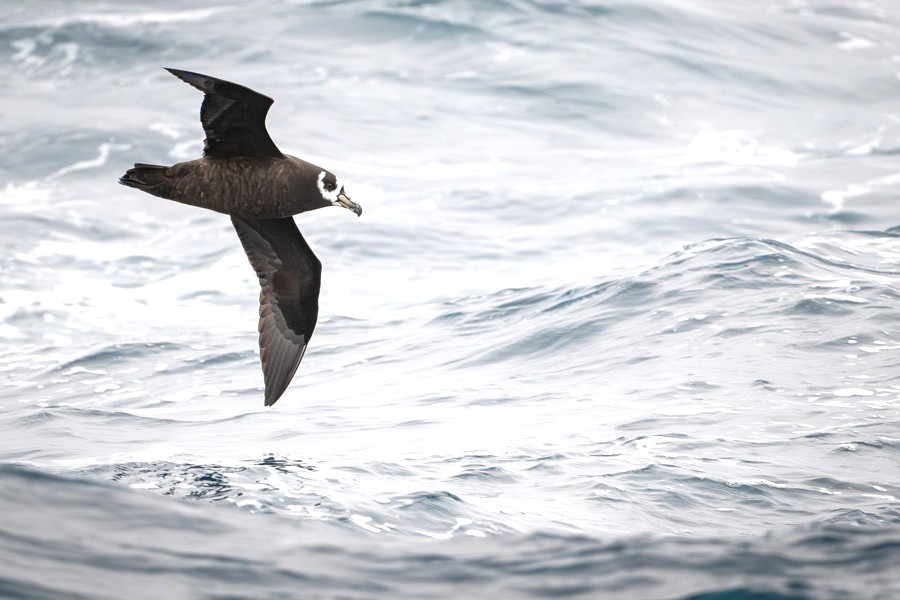
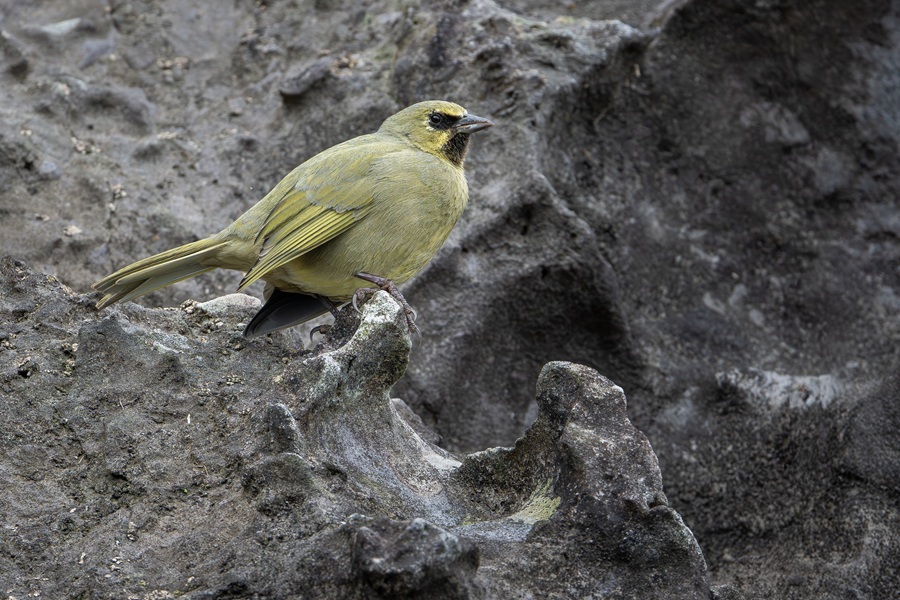
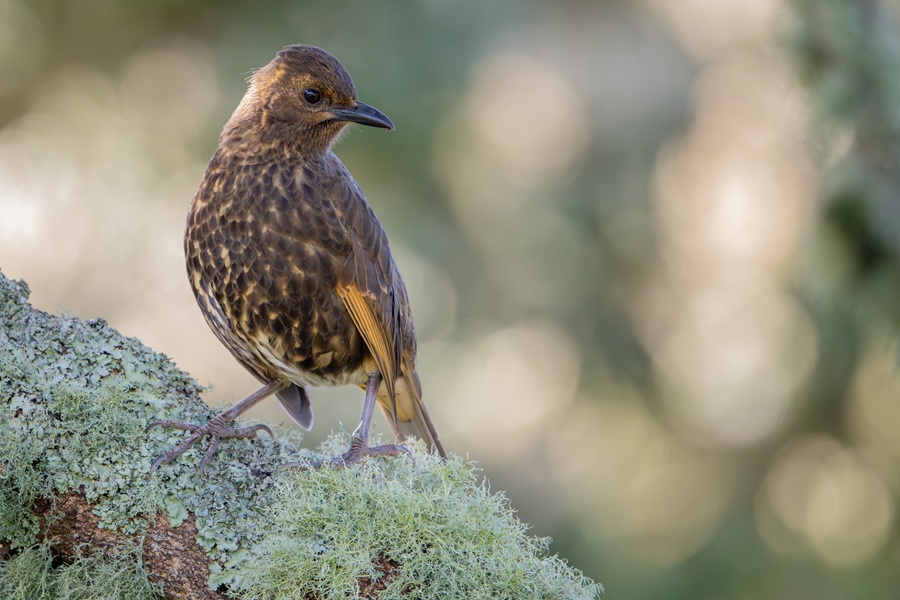
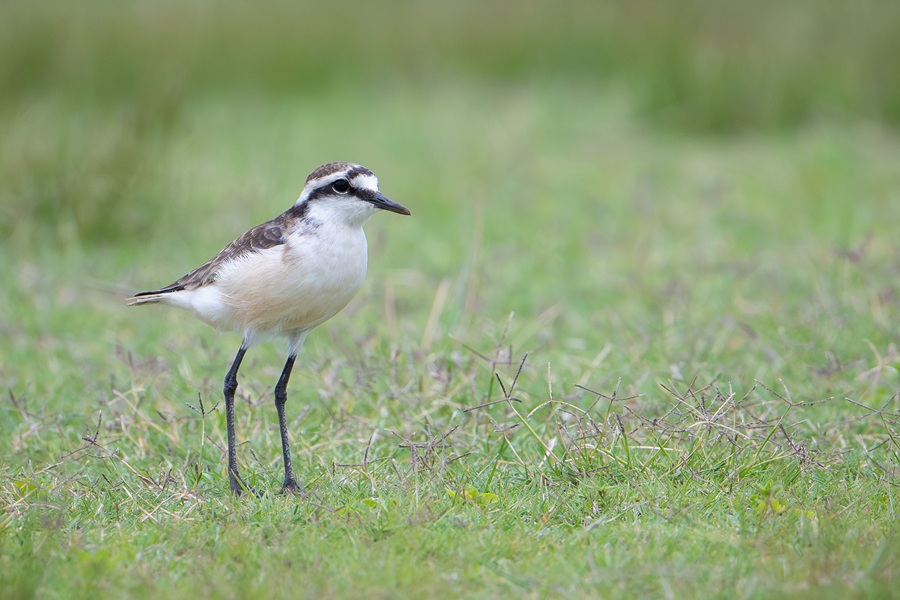
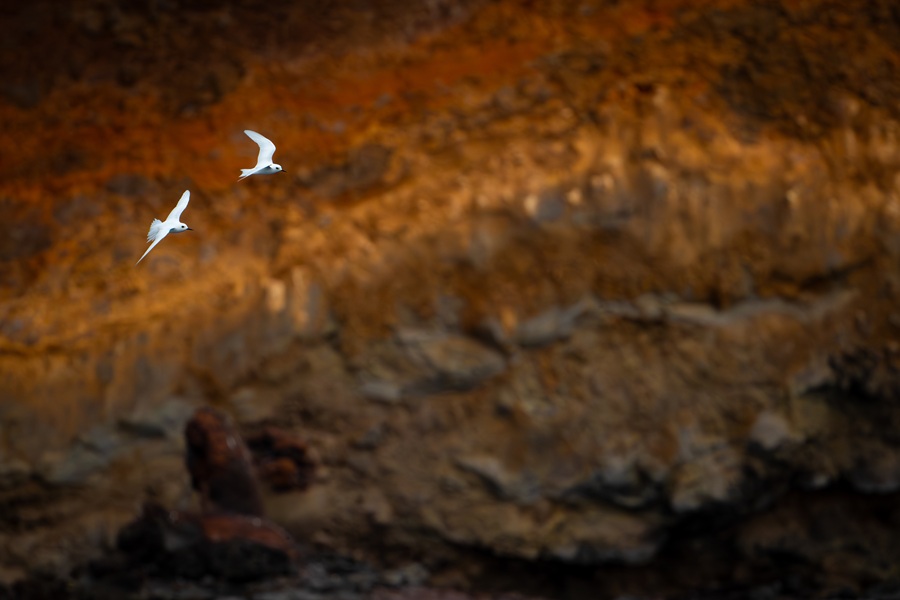
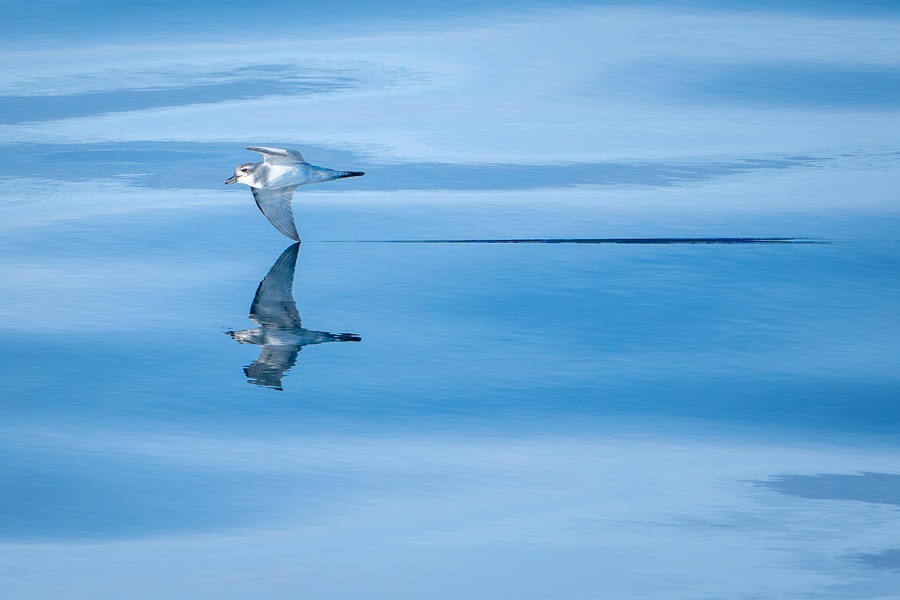
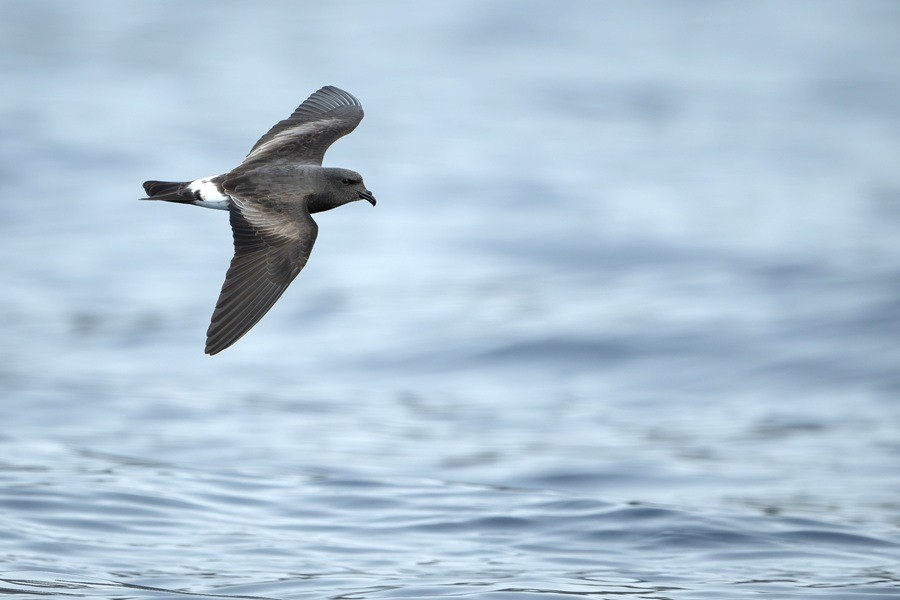
Join us on arguably the best seabird cruise in the world, where we can expect up to 50 species of tubenose and 6 penguins! As usual, we have already confirmed accompaniment by an Ornis leader at no extra cost to our guests. Having never-give-up expert guidance on-deck during all daylight hours (in addition to the resident ship guides) allows our groups to enjoy extremely high success with the scarcest and most challenging pelagic species. From Spectacled Petrel and Snow Petrel, to Atlantic White Tern and Saint Helena Plover, with chances for Inaccessible Island Rail and Gough Finch, our leaders never rest so will be creating their own luck during this incredible voyage with you to remote islands which are home to millions of seabirds.
Next Dates
1 April - 4 May 2029 (34 days)
Leaders:
Julien Mazenauer
Group Size Limit:
25
Single Room Supplement: $
TBD
Deposit: $
TBD
Price: $
TBD
Add a Title
Leaders:
Julien Mazenauer
Group Size Limit:
Add a Title
Single Room Supplement: $
TBD
Deposit: $
TBD
Price: $
TBD
Add a Title
Prices below reflect lowest-cost options in quadruple-share porthole, twin-share porthole, and single porthole cabins. Please contact us for information and rates of variation to triple-share, twin window, twin deluxe, or superior suite.
Pretour extension to the Antarctic Peninsula is available from 5,500 EUR. The 10% discount offered by Oceanwide for consecutive cruise bookings has not been applied on the Ushuaia to Saint Helena prices, but has been applied on the Ushuaia to Cape Verde prices listed below.
QUADRUPLE PORTHOLE (PER PERSON)
Ushuaia to Saint Helena: 8,250 EUR
Ushuaia to Cape Verde: 9,450 EUR
TWIN PORTHOLE (PER PERSON)*
Ushuaia to Saint Helena: 10,300 EUR
Ushuaia to Cape Verde: 11,925 EUR
*if you do not have a specified roommate, one will be randomly allocated to share your twin room. If you wish to occupy the whole room by yourself, see the single occupancy price below.
TWIN PORTHOLE (SINGLE OCCUPANCY)
Ushuaia to Saint Helena: 17,510 EUR
Ushuaia to Cape Verde: 20,272 EU
Deposit: 20% of your total booking cost, due immediately to confirm booking.
Accommodation:
Comfortable cabins aboard the MV Plancius. Free WiFi is included.
Walking difficulty:
Easy walking during all excursions on the islands.
Tour cost includes:
All accommodation, main meals, drinking water, internal flights (as stated in itinerary), overland transport, travel permits, entrance fees, and guide fees.
Tour cost excludes:
Flights before and after the tour start/end, visa, travel insurance, tips to tour leaders, tips to vessel staff, laundry, drinks, and other items of a personal nature.
ORNIS LEADER GUARANTEE: We already have enough bookings to guarantee an Ornis leader on Atlantic Odyssey 2029. This ensures our guests have the best possible onboard experience with seabird identification help and personal assistance during landings. Contact us to be placed on the list for updates when the final dates and prices for this cruise are announced.
FREE EXCURSIONS: By booking through Ornis, you will pay the same price as if you book directly with Oceanwide. However several land-based excursions and boat trips are not included by Oceanwide in their pricing, and those we include in our birding program whilst on the ship will be covered by Ornis at no extra cost. We will also be providing a free birding excursion on Day 34 in Praia as described below.
Day 0: We recommend arriving early to Ushuaia, to make sure you don’t “miss the boat”, so-to-speak! Hotels and other arrangements on this day are not included in cruise cost, but participants can opt to join one of our guided birding excursions for a small fee. These will focus on searching out White-bellied Seedsnipe and Yellow-bridled Finch, and/or coastal species like Fuegian Steamer Duck, Grey-flanked Cinclodes, and Blackish Cinclodes.
Day 1: The voyage begins where the world drops off. Starting in the afternoon, we embark from Ushuaia, “The End of the World”, and sail the mountainous Beagle Channel for the rest of the evening. If we keep our eyes peeled, there is a chance to see Western Rockhopper Penguin in the water.
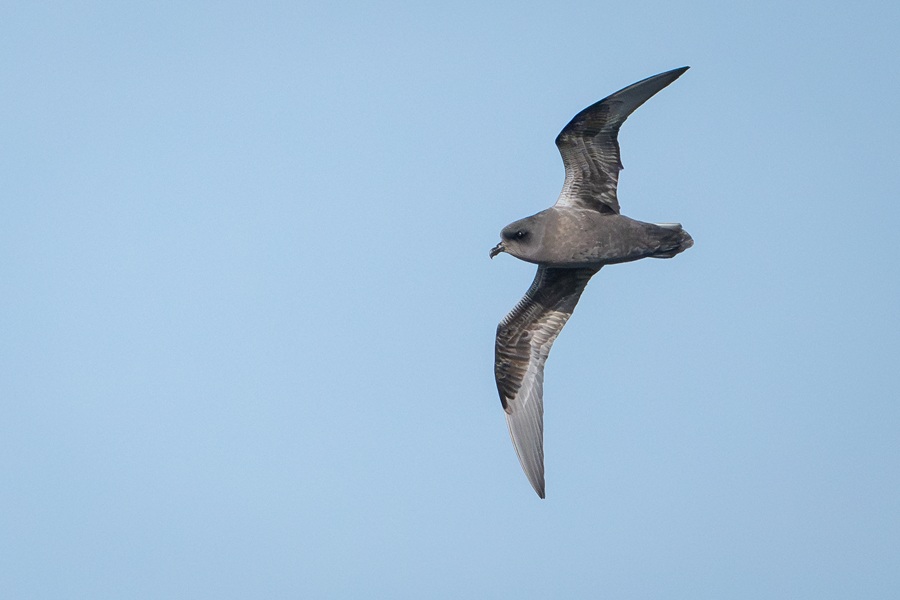
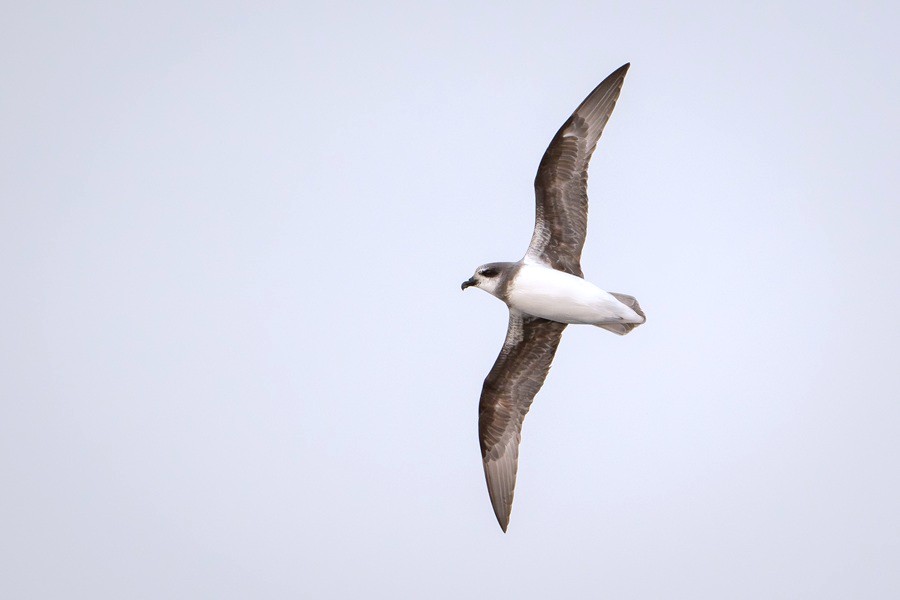
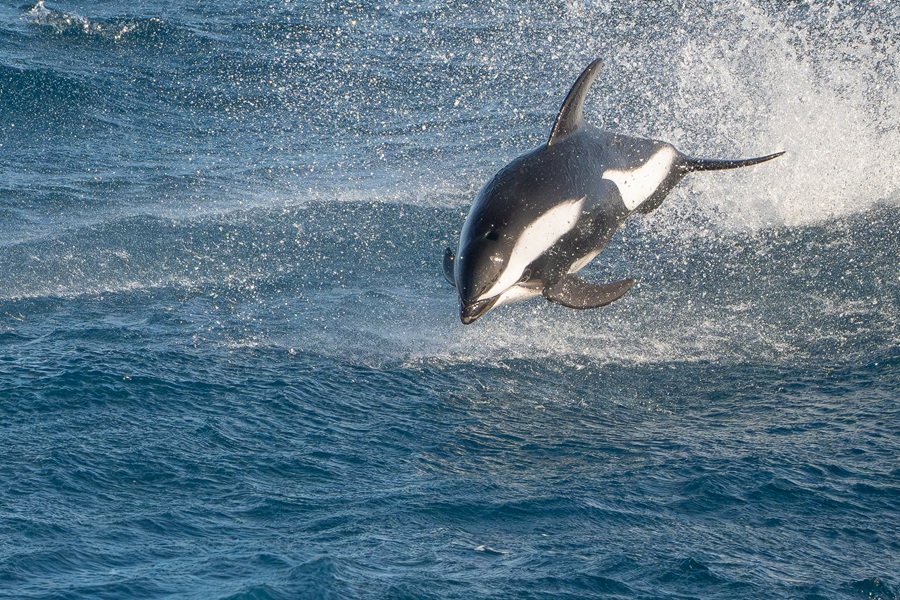
Day 2-3-4: En route to South Georgia. After passing the Antarctic Convergence, which is a natural boundary formed when north-flowing cold waters of the Antarctic collide with warmer subantarctic waters, the birdlife changes. Tubenoses become incredibly abundant. Eyes trained not on the horizon, but right beside the ship, we will enjoy the passing throngs of Cape Petrel, Black-bellied Storm-Petrel, Slender-billed Prion, and Antarctic Prion, while we work to identify South Georgian Diving Petrel and watch out for spectacular cetaceans like Hourglass Dolphin. Passing by will be the aerial masters of subantarctic: Kerguelen Petrel, Soft-plumaged Petrel, Blue Petrel, Southern Fulmar, Light-mantled Albatross, Grey-headed Albatross, Southern Royal Albatross, and the ruler of them all, Snowy Albatross (AKA Wandering Albatross). Some initial cetaceans could include Blue Whale, Southern Right Whale, and Humpback Whale.
Day 5-6-7: Exploring South Georgia. Experience the greatest concentration of marine birds and mammals anywhere in the world. Vast nesting colonies of King Penguin with huge Southern Elephant Seal and cheeky Antarctic Fur Seal scattered throughout. The strange endemic Macaroni Penguin porpoising in the water alongside more numerous Chinstrap Penguin and Gentoo Penguin. Hefty Southern Giant Petrel fighting, as bizarre Snowy Sheathbill pick through colonies. The endemic South Georgia Pipit is now in full recovery and easy to see after a successful rat eradication, as are the endemic subspecies of Imperial Cormorant and Yellow-billed Pintail. We can’t forget chances for the sublime Snow Petrel in the incredibly scenic Drygalski Fjord which words cannot do justice. You will have to experience it for yourself!
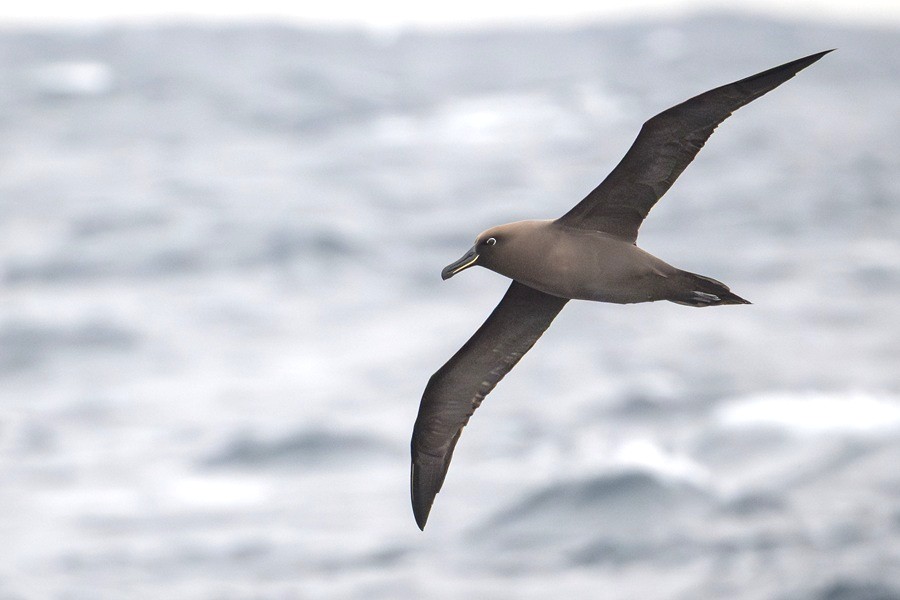
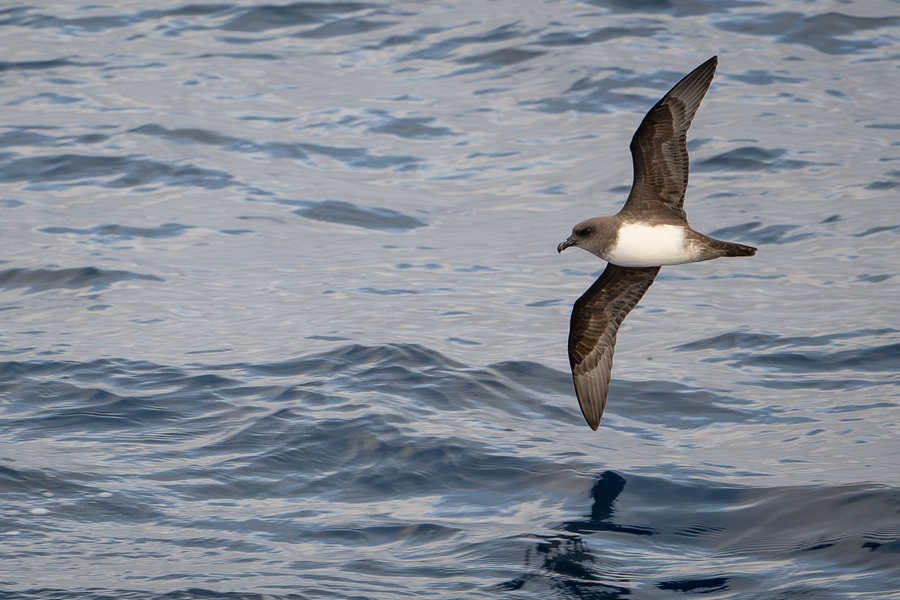
Day 8-9-10-11-12: En route to Gough Island. Some of the very best pelagic birding in the entire world. Crossing back into warmer subantarctic waters, we will begin to see Atlantic Yellow-nosed Albatross, Sooty Albatross, Atlantic Petrel, Kerguelen Petrel, Grey Petrel, Great-winged Petrel, Great Shearwater, and Grey-backed Storm Petrel. We will work hard to successfully identify MacGillivray's Prion during the middle portion of the crossing, certainly one of the most tricky seabirds in this region. Many possible cetaceans could include the stunning Hourglass Dolphin, Fin Whale, Sei Whale, Sperm Whale, Southern Bottlenose Whale, Strap-toothed Beaked Whale, or even the very rare Sheperd's Beaked Whale. Approaching Gough will be marked by the appearance of Tristan Albatross, Spectacled Petrel, Subantarctic Shearwater, and perhaps some White-faced Storm Petrel amongst larger numbers of the intruiging "Gough Storm-Petrel", taxonomy unresolved.
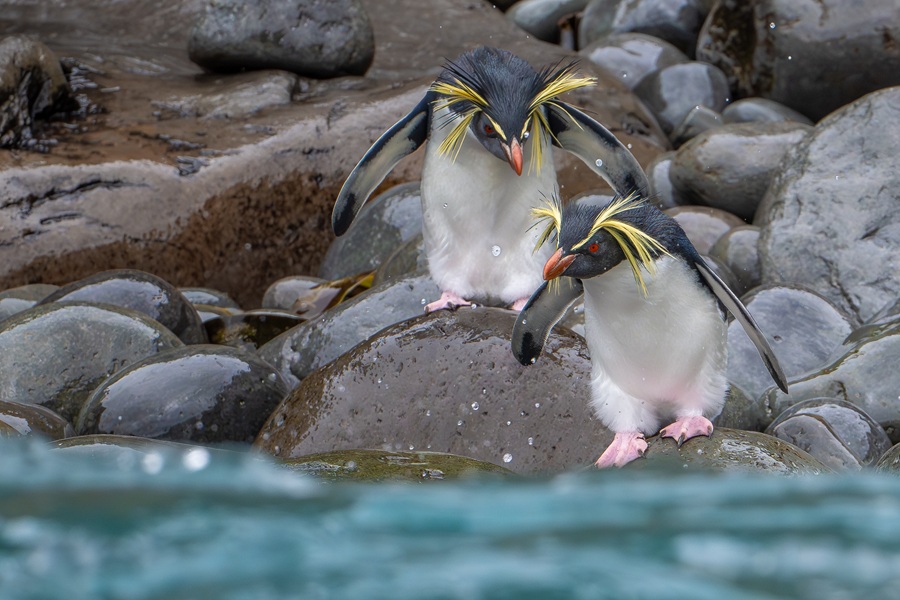
Day 13: Exploring Gough Island. Millions of seabirds inhabit this World Heritage Area. Most of the world’s Northern Rockhopper Penguin and Tristan Albatross breed here, along with Atlantic Yellow-nosed Albatross, Sooty Albatross, Broad-billed Prion, Great Shearwater, Kerguelen Petrel, Great-winged Petrel, Atlantic Petrel, Soft-plumaged Petrel, Grey Petrel, Subantarctic Shearwater, Grey-backed Storm Petrel, White-faced Storm Petrel, and of course the previously mentioned "Gough Storm Petrel". Another interesting taxon is the small “Tristan” Brown Skua, often seen harassing Antarctic Tern and Brown Noddy (the latter is a bit out of place, but yes they do breed here too). Weather permitting, a zodiac cruise along beautiful mosaiked mossy cliffs will allow close approach to see the two endemics: Gough Moorhen and Gough Finch. These are of course interspersed with Subantarctic Fur Seal and many Northern Rockhopper Penguins.
Day 14-15-16-17: Exploring the Tristan Group. Tristan da Cunha, with its impressive volcanic cone, is the main global breeding site for the Atlantic Yellow-nosed Albatross which can be seen constantly soaring along the highest ridges. Introduced cats are still present here, but many seabirds from Gough can be seen in surrounding waters. The endemic Tristan Moorhen went extinct in the late 19th century, but Gough Moorhen was introduced here in the 1950s and the island now offers an excellent chance to see them if Gough itself did not produce a sighting.
Visiting the other two islands in the group (hosting immense seabird colonies and four endemics between them) is entirely weather dependent, but with an extra day now included in the Tristan Group on all cruises post-2019 we can cross our fingers. Having a larger contingent of enthusiastic birders on board as part of our group can somewhat increase the chances of success.
Nightingale Island holds Tristan Thrush and Nightingale Island Finch in abundance, but a moderate hike is required for the Critically Endangered and rapidly declining Wilkins’s Finch. They are a bit clumsy on land, but Great Shearwaters can be seen using the walking trail as their runway. Watch your heads as they return to the sky! Both Spectacled Petrel and Sooty Albatross are common in the surrounding ocean, so we can expect stellar views of these much-wanted seabirds.
Inaccessible Island is almost entirely surrounded by sheer 300m high cliffs, but there are two potential landing beaches if conditions are calm. The world’s smallest flightless bird (and one of the most evocatively named) is quite common if we can get ashore: Inaccessible Island Rail. Even if we cannot land, we should be able to see Inaccessible Island Finch from a zodiac cruise. Dusk vigils in nearby waters may produce sightings of the poorly-known Atlantic form of White-bellied Storm-Petrel amongst the now-familiar and much more numerous "Gough Storm-Petrel".
Day 18-19-20-21: En route to Saint Helena. Heading towards and crossing the Tropic of Capricorn, we enter calmer subtropical seas. The southern tubenoses drop off as we begin to see warm-water species like “Saint Helena” Band-rumped Storm Petrel, Bulwer’s Petrel, Red-billed Tropicbird, Masked Booby, Brown Booby, and Black Noddy. We should also see small numbers of Arctic Jaeger, Pomarine Jaeger, and Long-tailed Jaeger, all on their way back to the Northern Hemisphere. There is a small possibility during this stretch for the rare Trindade Petrel for those who persist with scanning from the decks, while another exciting animal regularly seen in this area is the shark-mimicking Dwarf Sperm Whale. So our eyes will be peeled even during these periods of relative calm.
Day 22-23-24: Exploring Saint Helena. Landing at Jamestown, we have ample time to explore this tiny island where Napoleon was exiled after his defeat at Waterloo in 1816. There will be many breeding Atlantic White Tern (recently split from populations in the Pacific), along with Red-billed Tropicbird on the cliffs. Only one Critically Endangered endemic remains extant: Saint Helena Plover. We should find this one without much difficulty on Deadwood Plain. Our tour includes a boat trip to some small islets on the west coast to look at breeding Masked Booby, Brown Booby, Brown Noddy, Black Noddy, and hundreds more "Saint Helena" Band-rumped Storm Petrel which are beginning to nest.
There are excellent opportunities to snorkel with Whale Shark (reliable and near-guaranteed) for those who are interested in this phenomenal experience, which will be offered as an activity to sign up for on the ship before we arrive. Both Pantropical Spotted Dolphin and the rarer Rough-toothed Dolphin can be seen from the ship or during various small boat activities. Those interested in the history of the island will be able to join bus tours which visit sites like Napoleon's grave and Plantation House. At the end of our third day, we begin steaming towards Ascension Island.
*** Participants may choose to disembark at lunchtime on Day 24 and fly home from Saint Helena Airport (HLE) via South Africa. This usually involves staying one night on the island before a scheduled flight to Johannesberg (JNB) the next day. ***
Day 25-26: En route to Ascension Island. Sailing along the Mid-Atlantic Ridge, a sprawling submarine mountain range running about 16,000 km from the Arctic Ocean towards the southern tip of Africa. While flying fish will be common, birds will be sparse. That said, sightings should hopefully include our first Leach’s Storm Petrel and Cory's Shearwater, the latter worth studying because sometimes a couple of Scopoli's Shearwater can be picked out. Towards the end of the journey, we will keep careful watch for “Ascension” Band-rumped Storm Petrel.
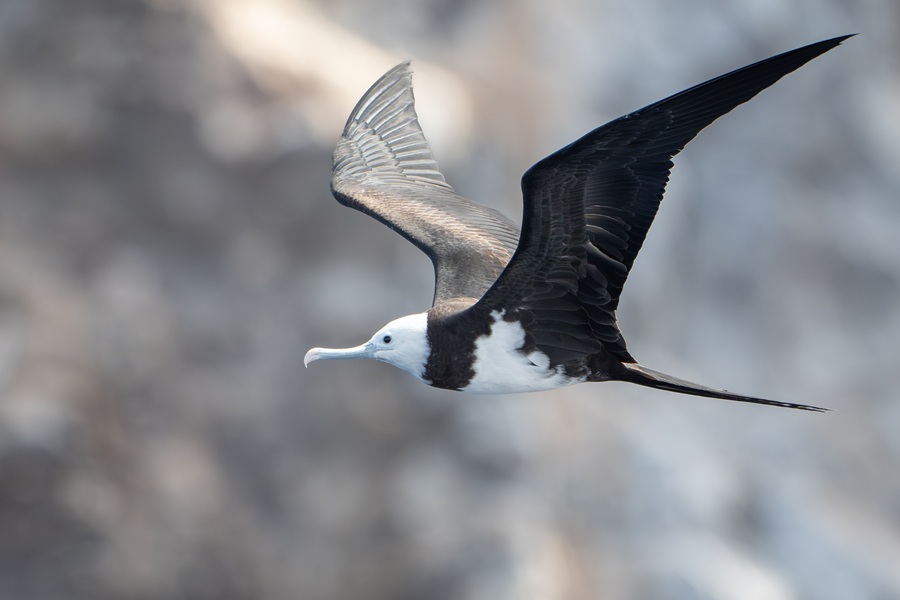
Day 27: Exploring Ascension Island. This tropical volcanic island hosts the Vulnerable endemic Ascension Frigatebird, which we will be able to enjoy near Boatswain Bird Island just off the northeast coast. This spectacular place is hard to describe, with thousands of birds circling over the boat as squadrons of Masked Booby pass by as Sooty Tern hunt in the shallows and hundreds of White-tailed Tropicbird sail overhead. Long sandy beaches are a major breeding site for Green Turtle, which we may be able to see from the ship and distinguish from Loggerhead Turtle or Leatherback Turtle which are also present in these seas.
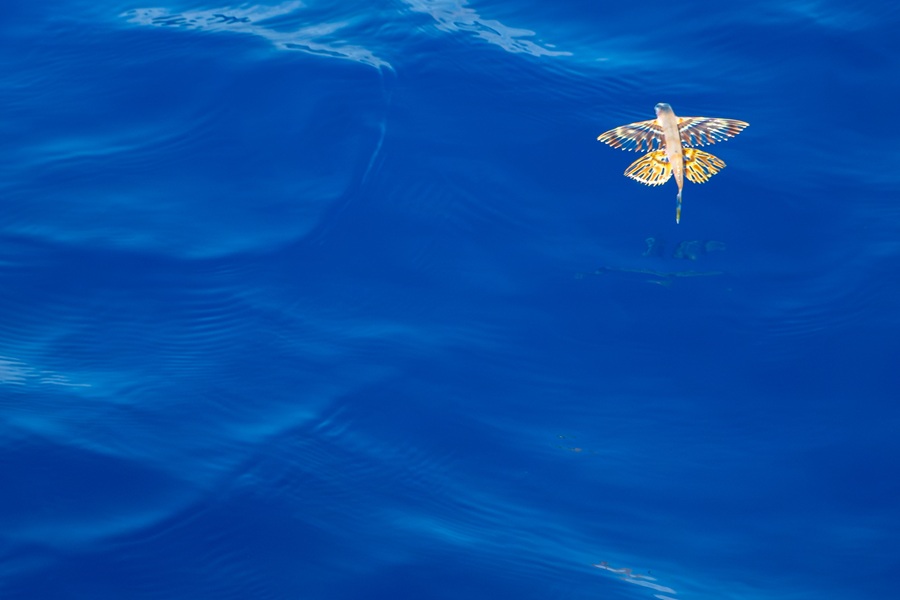
Day 28-29-30-31-32-33: En route to Cape Verde. Crossing the Equator and the Doldrums, giving us time for more barbeques and drinks on deck! Expect some of the same tropical seabirds from the past week, hopefully with a surprise or two. Long-tailed Jaeger, Sabine’s Gull, and Arctic Tern should appear on their northwards spring migration, with good chances for Clymene Dolphin, Spinner Dolphin, and Cuvier's Beaked Whale. If we come across any floating Sargassum seaweed then some of the most spectacular golden-coloured flying fish on the planet can be found. During our final days we should see see Cape Verde Shearwater, Boyd’s Shearwater, and Fea’s Petrel. The rarer Cape Verde Storm Petrel is possible too, but we will count ourselves very lucky to see one.
Day 34: Arrival into Praia on Santiago Island. Arrangements on this day are not included in the cruise cost, but participants can join our free birding excursion to the interior of the island in search of three endemics: Cape Verde Swift, Cape Verde Warbler, and Iago Sparrow. There is a good chance for "Bourne's" Purple Heron and a small chance for "Cape Verde" Common Buzzard. We will return to the ship and collect our luggage for disembarkation in the late afternoon.
NOTE: We can advise on arrangements for anyone who is interested in going to see the threatened Raso Lark after the cruise. Please let us know at the time of booking if this will be of interest to you so that we can coordinate a plan between participants.
FREQUENTLY ASKED QUESTIONS
What do I get if I book Atlantic Odyssey through Ornis?
You pay the same price as advertised by the cruise company, but we include:
Free coastal boat trip at Saint Helena
Free plover search at Saint Helena
Free birding excursion in Praia
Free checklist and daily get-together
Personal birding assistance from onboard Ornis leader/s
Personal hotel bookings in Ushuaia
Personal birding recommendations and optional group outings before boarding
What does an onboard Ornis leader do differently to normal cruise staff?
The cruise company always provides several ship guides, but most do not specialise in birding and seabird identification. They also have many additional tasks relating to the ship and other passengers, which reduces their available time on deck and during island landings. Our expert leader is present with the exclusive task of finding birds for our guests, so will be outside helping with search and identification at almost all hours of the day whilst at sea. Those who have travelled on cruises with us before know that our leaders posess exceptional pelagic seabirding skills, and are able to drastically increase the number of birds seen whilst onboard. It is also useful to have a dedicated bird tour leader during island landings and zodiac cruises, as we are able to ensure our guests do not accidentally miss birding opportunities.
Why does having a larger birding group onboard matter?
Our group size when we run this popular cruise is typically 10-25 people, with trips reaching the higher end of this range receiving a second Ornis leader. Supervising a large group of birders allows us to have good relationships with the ship staff, and helps establish birding as a priority within their day-to-day activity plans. It is not entirely random that our past trips have enjoyed high success with island landings.
Where relevant, we are also able to keep Ornis guests corralled into the same zodiacs with other birders, keeping the flotilla together as we explore coastal areas. It is also worth remembering that hanging out with a bunch of like-minded guests in the bar will make so many weeks at sea much more enjoyable!