Tanzania: Northern Specialties
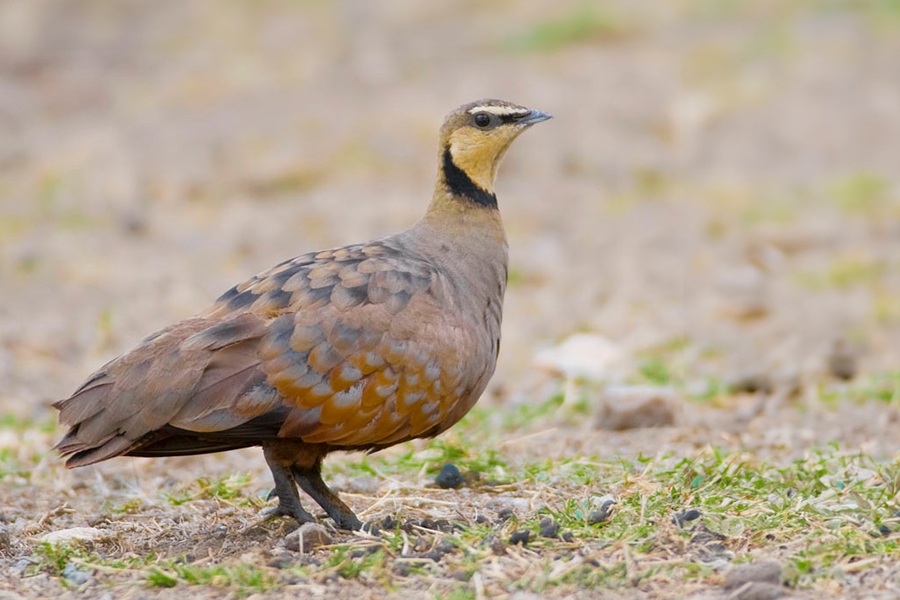
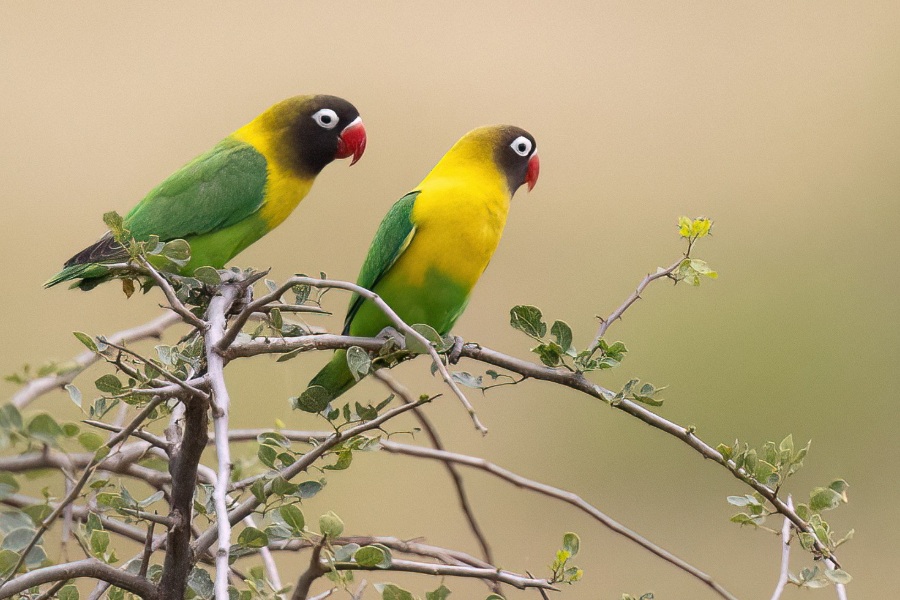
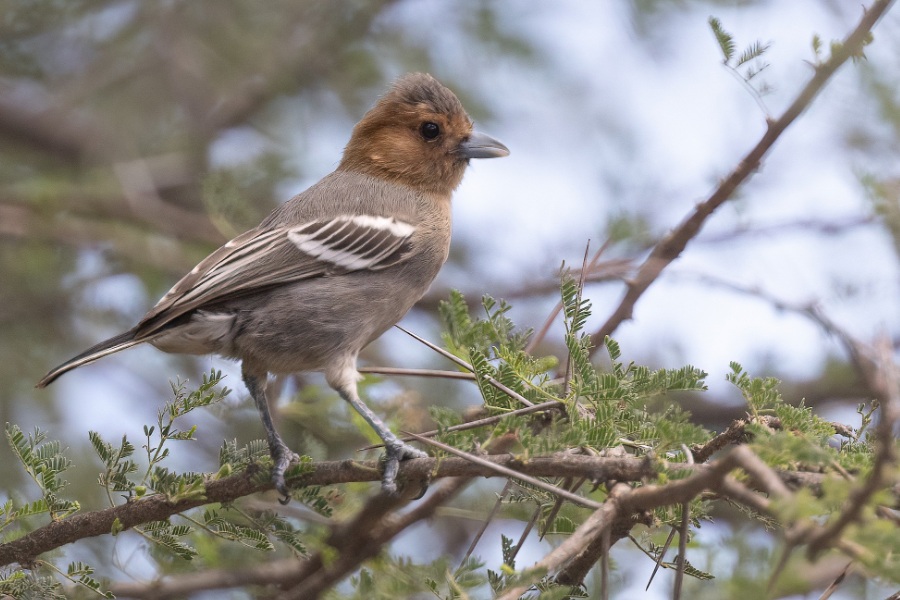
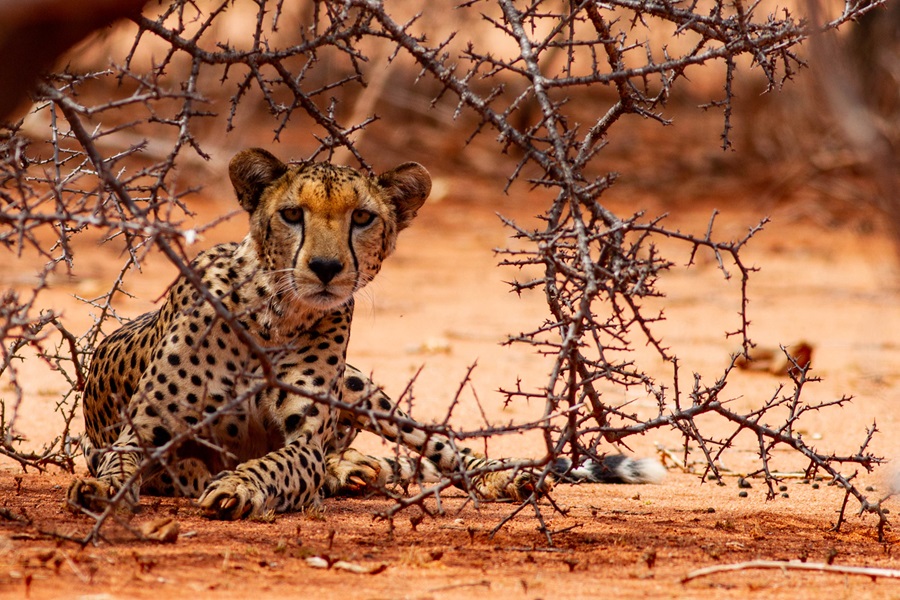
Specialised birding safari from Mount Kilimanjaro to the Serengeti Plains, with a focus on sought-after birds best seen in Tanzania like Grey-breasted Spurfowl, Yellow-throated Sandgrouse, Bronze-winged Courser, Fischer's Lovebird, Yellow-collared Lovebird, Grey-crested Helmetshrike, Maasai Apalis, South Pare White-eye, Mbulu White-eye, and the extremely distinctive "Mbulu Robin-Chat". Many other range-restricted beauties occur like Golden-winged Sunbird, Hildebrandt's Starling, and Abyssinian Crimsonwing, but along with these important avian specialties we will be enjoying one of the most amazing ecosystems on the planet with truly unbelivable densities of mammals. Think Lion and Cheetah, Black Rhino and Maasai Giraffe, or maybe even Serval and Honey Badger.
Next Dates
17 April - 30 April 2028 (14 days)
Leaders:
Chris Venetz
Group Size Limit:
6
Single Room Supplement: $
700 USD
Deposit: $
1500 USD
Price: $
9900 USD
Add a Title
Leaders:
Chris Venetz
Group Size Limit:
Add a Title
Single Room Supplement: $
TBD
Deposit: $
TBD
Price: $
TBD
Add a Title
Accommodation:
All comfortable lodges.
Walking difficulty:
Easy throughout, but one or two moderate hikes for Mbulu Robin-Chat.
Tour cost includes:
All accommodation, main meals, drinking water, internal flights (as stated in itinerary), overland transport, tips to local drivers and guides, travel permits, entrance fees, and guide fees.
Tour cost excludes:
Flights before and after the tour start/end, visa, travel insurance, tips to tour leaders, laundry, drinks, and other items of a personal nature.
Day 1: Arrivals into Kilimanjaro International Airport (JRO), from which we will provide transfers to the adjacent city of Arusha. We will attempt to find the range-restricted Sombre Nightjar after dinner. Overnight in Arusha.
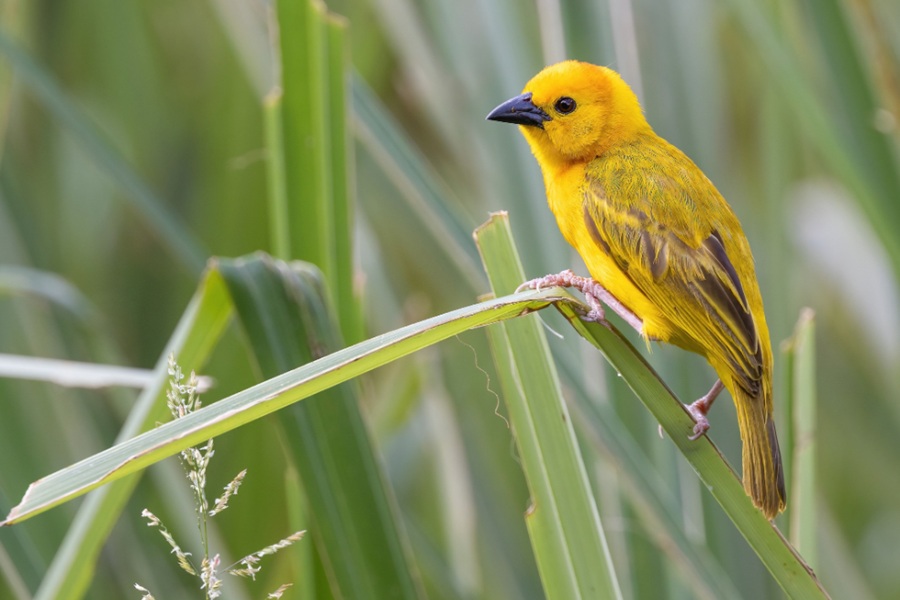
Day 2: Birding on the slopes of Mount Meru this morning, our focus will be on the scarce Abbott's Starling and endemic Broad-ringed White-eye. Amongst a number of more widespread species, we may also come across Scaly Francolin, Ayres’s Hawk-Eagle, Mountain Buzzard, Scarce Swift, Placid Greenbul, Kenrick’s Starling, Waller’s Starling, Moustached Tinkerbird, Brown-breasted Barbet, and the near-endemic Hartlaub’s Turaco. This is also our first chance at Abyssinian Crimsonwing, for which we will keep our eyes peeled. This evening a colony of Taveta Weaver will be visited near our hotel, and we may also encounter our first "Eastern" Black Bishop. Overnight in Arusha.
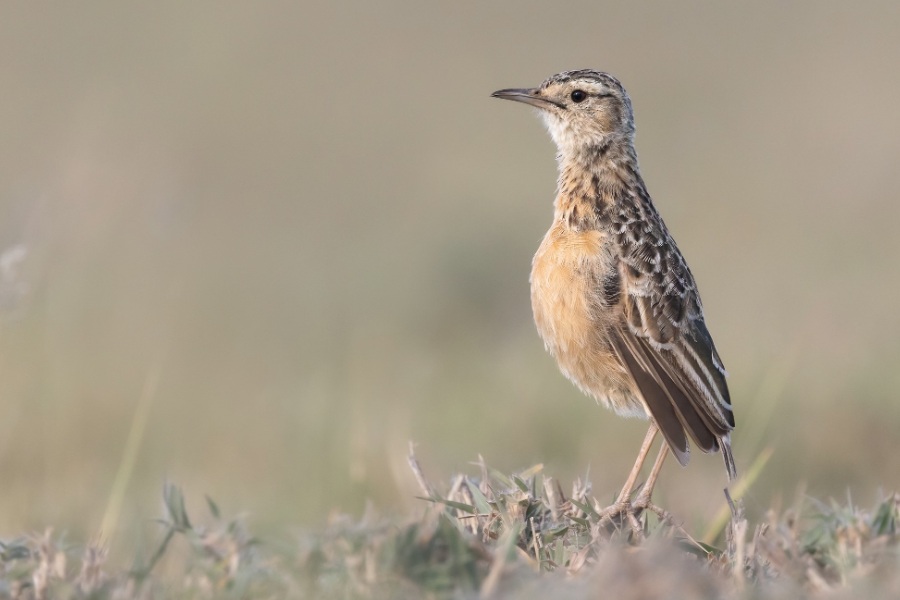
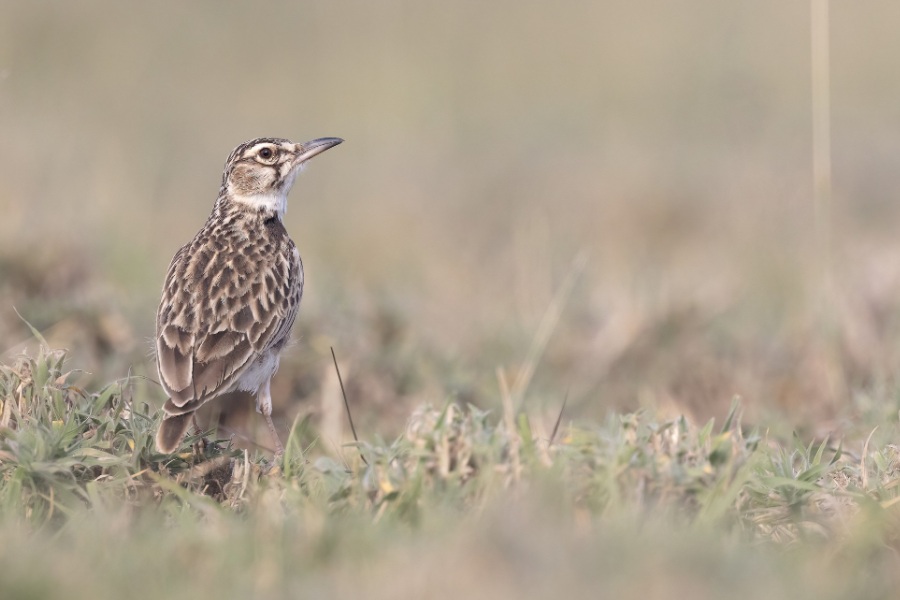
Day 3: Heading early towards the grassy plains, we will be searching in particular for a trio of special larks: the highly-localised Beesley's Lark, irruptive "Athi" Somali Short-toed Lark, and near-endemic Short-tailed Lark. At this time of year during the onset of the monsoon, all should be relatively easy to find. We aim to encounter Sentinel Lark, Foxy Lark, and Fischer’s Sparrow-Lark, while two other important specialties include Grey-capped Social Weaver and hopefully Southern Grosbeak-Canary. If time allows we may also search for species which range further north but are still worth seeing here, like Little Rock Thrush, Scaly Chatterer, Taita Fiscal, Buff-bellied Warbler, and Tiny Cisticola.
Once done, we'll head to Tarangire for our first safari drive! Already Tanzanian endemics like Yellow-collared Lovebird, Ashy Starling, and Rufous-tailed Weaver can be expected. Staff at the lodge often know roosting spots for the striking Yellow-winged Bat, or otherwise it might be seen at dusk perch-hunting for insects. After dinner an *optional* night drive gives excellent chances for Bronze-winged Courser (here being the best place in Africa to see this cryptic species), while Three-banded Courser and Slender-tailed Nightjar may appear too. Overnight in Tarangire National Park.
NOTE: There are may be several opportunities during this tour for participants to join optional lodge-run night drives in search of birds and other wildife. We do not include these in the tour cost, so those who participate will have the extra costs added to their tab at the conclusion of the tour (typically around 120 USD per drive).
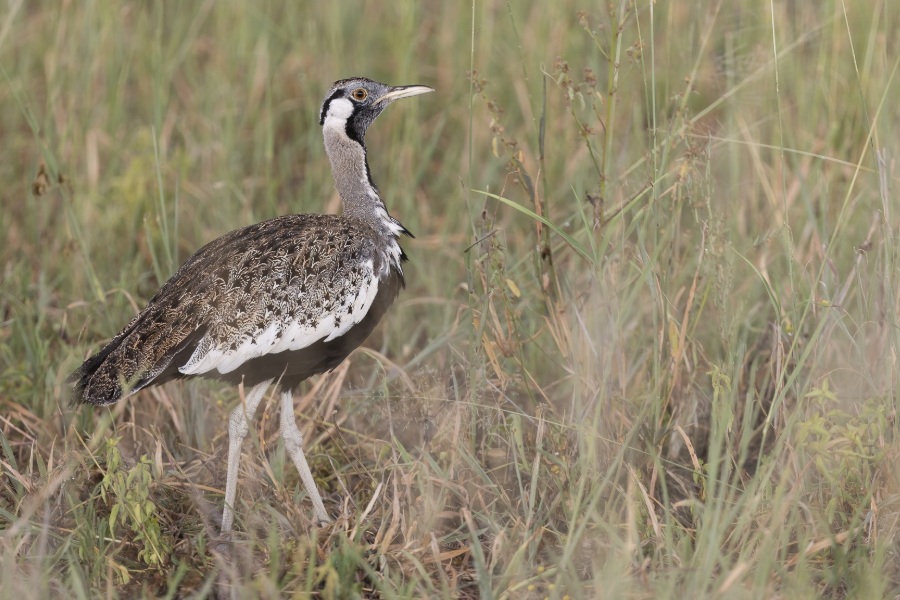
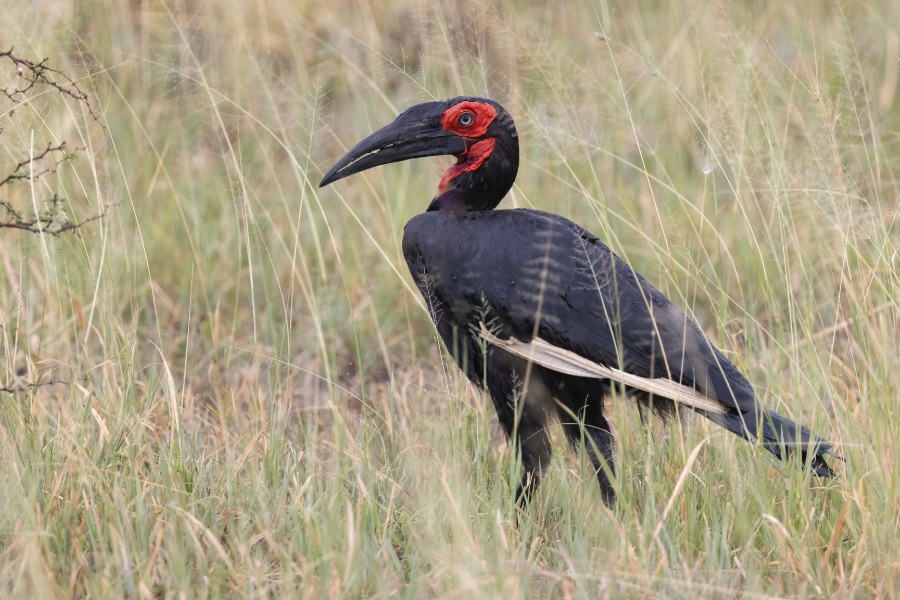
Day 4: Our full day of safari around Tarangire National Park is sure to be packed with birds and other wildlife. Pride of place will go to a handful of important targets like the stunning Yellow-throated Sandgrouse and Hildebrand’s Starling, neither of which should be difficult to find. Other specialties to find include Hartlaub's Bustard, Gorgeous Sunbird, and Swahili Sparrow, but there will be plenty of time to enjoy our time here while looking at more widespread but always exciting birds like White-headed Vulture, Saddle-billed Stork, Southern Ground Hornbill, Von der Decken’s Hornbill, Red-bellied Parrot, Northern Pied Babbler, Red-and-yellow Barbet, Slate-coloured Boubou, Banded Parisoma, Superb Starling, Spotted Palm Thrush, Crimson-rumped Waxbill, Black-faced Waxbill, the lovely Blue-capped Cordonbleu, Chestnut Sparrow, and perhaps the scarce Bushveld Pipit. An *optional* night drive should be possible again. Overnight in Tarangire National Park.
Day 5: We will have most of the day around Tarangire again before heading south to Babati for overnight.
Day 6: A special birding session, today we will target the extremely distinctive “Mbulu” Olive-flanked Robin-Chat. There is little doubt that this distinctive and attractive bird will be recognised as a full species soon, with a very restricted range. We may also encounter Schalow's Turaco, Mountain Yellow Warbler, Black-headed Mountain Greenbul, Brown Woodland Warbler, White-starred Robin, or even the scarce Oriole Finch before driving north to Ngorongoro Crater for overnight.
Day 7: If the weather is clear this morning we will have a magnificent view from the forested rim of Ngorongoro all the way down into the collapsed crater of this long-extinct volcano, now teeming with wildlife. Up on top we will be searching for specialties like Hildebrandt's Spurfowl, Golden-winged Sunbird, Mbulu White-eye, and Abyssinian Crimsonwing. Other species here also found north into Kenya include Montane Nightjar, Tacazze Sunbird, Eastern Double-collared Sunbird, Brown Parisoma, Red-cowled Widowbird, Jackson's Widowbird, Lynes’s Cisticola, Hunter's Cisticola, and Pangani Longclaw. In the afternoon we will take a safari drive down into the crater. An excellent place to see Black Rhinocerous, along with African Lion and Spotted Hynea. A few extra birds can be seen like Pectoral-patch Cisticola and Fischer's Sparrow-Lark. There may be opportunity for another *optional* night drive after dinner, though only along the crater rim and not on the crater floor itself. Overnight at Ngorongoro Crater.
Day 8: Morning birding on the crater rim again before driving north for a quick visit to the top of Olduvai Gorge, often called "The Cradle of Mankind". This rich paleoanthropological site has produce over 60 early hominin fossils spanning two million years of evolution from Homo habilis to Homo erectus. Nowadays, it is an excellent site to see Southern Grosbeak-Canary and several other dry forest species like Northern Red-fronted Tinkerbird, Rufous Chatterer and White-bellied Canary. As the landscape heats up, we'll continue to Ndutu for overnight.
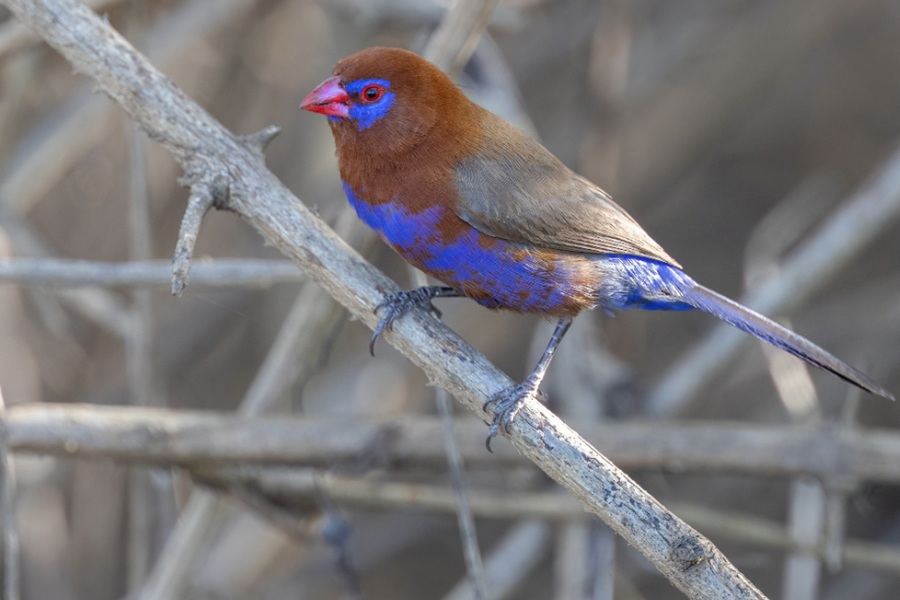
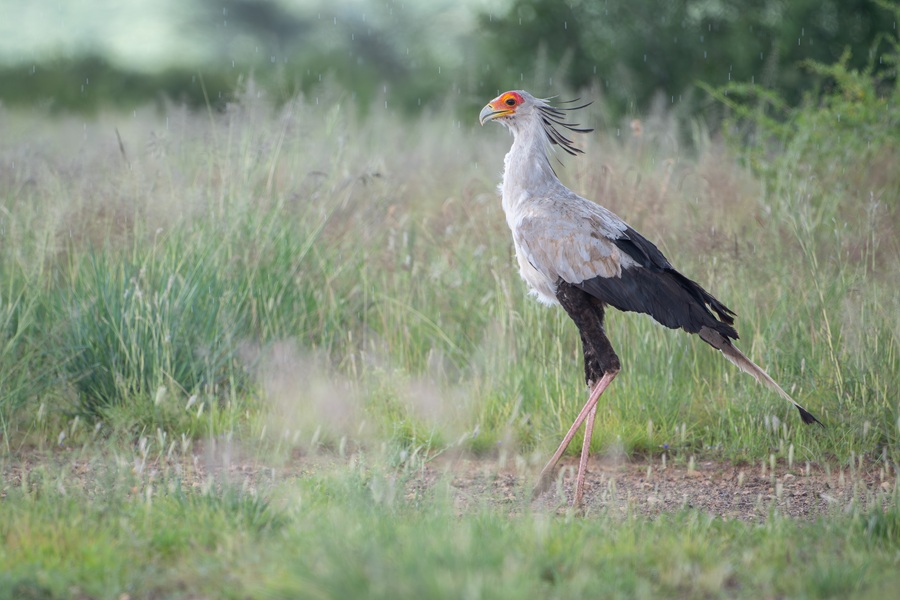
Day 9: Now in the proper Serengeti Plains, Ndutu will give us our first taste of things to come. Some of the most exciting birds to see this morning are Grey-breasted Spurfowl and Fischer's Lovebird, while many other species will likely include Common Ostrich, White-bellied Bustard, Double-banded Courser, Secretarybird, Lappet-faced Vulture, Hooded Vulture, Abyssinian Scimitarbill, D'Arnaud's Barbet, Black-lored Babbler, the attractive flycatching Silverbird, White-headed Buffalo Weaver, Steel-blue Whydah, and Purple Grenadier. The surrounding grasslands are covered with big game, and Cheetah is a particularly common predator. Overnight at Ndutu.
Day 10-11-12: Leaving Ndutu, we work our way towards Seranera for a three night stay right in the middle of the Serengeti. Particular focus will be on watching for the uncommon Cardinal Quelea and Grey-headed Silverbill whenever we are driving, this area giving our best chances at these much-wanted specialties. Two other targets are the scarce White-tailed Lark and the unassuming Maasai Apalis, both of which we have a very good chance of finding in the area. There are many other important birds for us spread across the acacia-dotted plains, some of these being Tanzanian Red-billed Hornbill, Usambiro Barbet, Red-throated Tit, White-bellied Tit, and “Buff-bellied” Grey Penduline Tit, and of course the roving Grey-crested Helmetshrike. Other more widespread species may include Meyer's Parrot, Sooty Chat, Rosy-throated Longclaw, and perhaps the recently-discovered population of Melodious Lark. Nights at Seranera.
Day 13: Departing the Serengeti, it’s a long drive returning us to civilisation today. There should be opportunities for a couple of targeted stops to chase up any missing targets along the way if required. Overnight in Arusha.
Day 14: An early departure from the hotel will see us head a few hours south-east, arriving in the late-morning to search for the highly range-restricted South Pare White-eye. After a few hours, we'll head back to Kilimanjaro International Airport (JRO) where the tour ends this afternoon.